Blog

  • Sancocho de Gallina: Panama’s National Dish

    If Panama has a dish that means home, it is sancocho. A deep, golden chicken soup thick with root vegetables and corn and scented with culantro, it is Sunday lunch, party food, and the universally agreed-upon cure for a rough morning. In 2003 it was officially named the country’s national dish — a title it had unofficially held for generations.

    This is a family version, in the santeño style — the spare, traditional approach from the Los Santos province in Panama’s interior. It came down through family conversations rather than any cookbook, which is exactly how sancocho has always traveled.

    The Two Things You Cannot Skip

    You can be flexible with a sancocho — more on that below — but two things are non-negotiable. The first is the chicken: traditionally a gallina de patio, a free-range yard hen, whose tougher meat makes a far richer broth than a supermarket bird. The second is culantro, the long-leafed herb — not cilantro, though cilantro will do in a pinch at triple the amount. As one Panamanian chef put it, culantro is the flavor of sancocho, even more than the chicken. It is the taste of Panama.

    Ingredients

    • 1 whole chicken (ideally a free-range hen), cut into pieces
    • 1 large onion, finely chopped
    • 1 green bell pepper, finely chopped
    • 4 cloves garlic, finely chopped
    • 4 leaves culantro (or ¼ cup cilantro), chopped
    • 1 tablespoon salt
    • 3 ears of corn, each cut into thirds
    • 2 lbs ñame (West African yam), cut into chunks — or substitute yuca, otoe, or zapallo
    • 1 teaspoon Mexican oregano
    • 1 ají chombo (Panamanian habanero), seeded and chopped
    • Optional: 1–2 Maggi chicken bouillon cubes
    • White rice, to serve

    Method

    1. Start the chicken dry. Put the chicken pieces in a large, heavy pot — no oil, no water. Heat over medium and let them warm and sweat in their own juices, about 8–10 minutes. This Panamanian step builds flavor before any liquid goes in.
    2. Add the onion, bell pepper, and garlic. Cover and cook over medium-low heat about 10 minutes, until soft and fragrant.
    3. Add water to generously cover — about 10–12 cups — along with the salt and the bouillon cubes if using. Bring to a rolling boil and hold it for at least 40 minutes.
    4. Add the culantro, corn, and ñame (or your mix of roots). Reduce to a steady simmer and cook 20–25 minutes, until everything is fully tender and the broth has thickened from the starchy roots. There should be plenty of broth.
    5. Rub the Mexican oregano between your palms to release its oils, and add it with the chopped ají chombo. Boil 8 more minutes. Taste and adjust the salt.
    6. Serve in deep bowls — each one with chicken, a piece of corn, and a good helping of roots — with white rice on the side.

    Make It Yours

    The santeño version keeps it simple — chicken, ñame, culantro, and not much else. But sancocho is forgiving and regional. In Chiriquí they add everything in sight; if you can find yuca, otoe, zapallo, and ñame, use all of them. A few family notes worth keeping: malanga and otoe are the same thing; Mexican oregano has more flavor than the Mediterranean kind; and when the family could not get a proper tough yard hen, they joked about “dragging the store-bought chicken around the backyard for a while” to toughen it up first.

    And since this is a hunting site — yes, a wild turkey or other game bird stands in beautifully for the hen. That long, slow simmer is exactly what wilder, leaner meat wants.

    Serve it hot, with rice and good company. Buen provecho.
  • Pollo de Abuelita con Macarrones: Adapted for Wild Turkey & Jackrabbit

    Pollo de Abuelita con Macarrones — Grandmother’s chicken with pasta — is a Panamanian comfort dish: chicken slow-braised in a rich tomato sauce and served over thick spaghetti. The version in our family came out of the Panama Canal Zone, pieced together from the memories of aunts and uncles who each remembered their grandmother’s kitchen a little differently.

    It was built for gallina de patio — a free-range yard hen, tougher and far more flavorful than anything from a store. And that is exactly why it adapts so well to wild game. The long, slow, acidic braise a tough old hen needs is the same treatment that turns lean, hard-working wild meat tender. Below are two adaptations: one for wild turkey, one for jackrabbit.

    First, Why This Works

    Wild game is lean. Without the fat of farmed animals, it dries out fast and can carry a strong, mineral edge. The braise solves both problems — the long simmer breaks down tough fibers, and the tangy tomato sauce (the family used Sauce Arturo, a Canal Zone staple) brings acid to tenderize, a little sugar to balance, and enough body to keep the meat moist. Plain tomato sauce would fall flat here. The bold, vinegary sauce does the heavy lifting.

    Wild Turkey Version

    Wild turkey — especially the breast — is much leaner than the farmed bird. A brine is the key step; it pulls moisture into the meat before it ever hits the pot.

    Brine (the night before)

    • 4 cups cold water
    • ¼ cup kosher salt
    • 2 tablespoons brown sugar
    • 1 bay leaf and 6 black peppercorns

    Dissolve the salt and sugar in the water, add the bay leaf and peppercorns, and submerge half a wild turkey — roughly a breast half, a thigh, and a drumstick. Refrigerate 8–12 hours, then rinse and pat dry.

    For the braise

    • 1 tsp ground onion (onion powder) and 3 cloves garlic
    • ½ tsp smoked paprika
    • 2–3 tbsp olive oil; salt and pepper
    • ½ onion and 1 green bell pepper, chopped
    • 2 cans (8 oz) tomato sauce — or Sauce Arturo, if you can find it
    • 1 small can tomato paste; 4–5 cups water
    • 4 leaves culantro (or ¼ cup cilantro), ½ tsp oregano, 1 bay leaf, a pinch of sugar
    • 1 packet Sazón con achiote
    • 1 lb thick spaghetti

    Method

    1. Rub the brined turkey with olive oil, onion powder, one clove of crushed garlic, smoked paprika, salt, and pepper. Rest 30 minutes.
    2. Brown the turkey well in a heavy pot — about 5–6 minutes per side. Set aside.
    3. In the same pot, cook the onion, remaining garlic, and bell pepper for 5 minutes. Add one can of tomato sauce to deglaze.
    4. Return the dark meat only — thigh and drumstick. Add the rest of the sauce, the paste, half the culantro, oregano, bay leaf, sugar, Sazón, and 4–5 cups water. Bring to a boil, then drop to a low simmer.
    5. After 20 minutes, add the breast. It cooks faster, so staggering it keeps it from drying out. Simmer another 40–55 minutes, until everything is tender.
    6. Stir in the rest of the culantro, remove the bay leaf, and adjust the salt. Serve over spaghetti cooked al dente.

    Jackrabbit Version

    Jackrabbit has an unfair reputation. Cooked fast, it is tough and dry. But braised — browned, then slow-simmered in tomato sauce until it falls off the bone — it is genuinely excellent. This recipe is essentially that technique. The braise does the work, so a brine here is optional.

    Optional brine (the night before)

    • 4 cups water, ¼ cup kosher salt, 2 tbsp brown sugar
    • 2 tbsp apple cider vinegar, 1 bay leaf, 8 peppercorns

    Submerge one jackrabbit, cut into 6–8 pieces, for 12–24 hours. Rinse and pat dry. Short on time? Skip it — the braise still delivers.

    For the braise

    • 1 tsp ground onion and 4 cloves garlic
    • ½ tsp ground cumin and the juice of ½ lime
    • 2–3 tbsp olive oil; salt and pepper
    • ½ onion and 1 green bell pepper, chopped
    • 2 cans (8 oz) tomato sauce or Sauce Arturo; 1 small can tomato paste
    • 5–6 cups water; 1 tbsp apple cider vinegar
    • 4 leaves culantro, ½ tsp oregano, ½ tsp cumin, 1 bay leaf, a pinch of sugar
    • 1 packet Sazón con achiote
    • 1 lb thick spaghetti

    Method

    1. Rub the rabbit with olive oil, onion powder, two cloves of crushed garlic, cumin, lime juice, salt, and pepper. Rest 30–45 minutes.
    2. Brown the rabbit well in batches in a heavy pot. Set aside.
    3. Cook the onion, remaining garlic, and bell pepper for 5 minutes. Add one can of sauce to deglaze.
    4. Return all the rabbit. Add the rest of the sauce, the paste, vinegar, half the culantro, oregano, cumin, bay leaf, sugar, Sazón, and 5–6 cups water — enough to cover. Bring to a boil, then drop to a bare simmer.
    5. Cover and braise 1½ to 2 hours. This is where the magic happens — the long, gentle heat and the acid break the meat down completely. Add water if it reduces too far.
    6. Stir in the rest of the culantro, remove the bay leaf, adjust the salt, and finish with a squeeze of lime. Serve over spaghetti.

    The Bottom Line

    Wild turkey wants the brine and a staggered breast. Jackrabbit wants patience and a long braise. Both want the same bold, tangy sauce the original recipe was built around. Treat the game the way that grandmother treated a tough yard hen — low, slow, and unhurried — and it will reward you.

  • Jackrabbit, yes

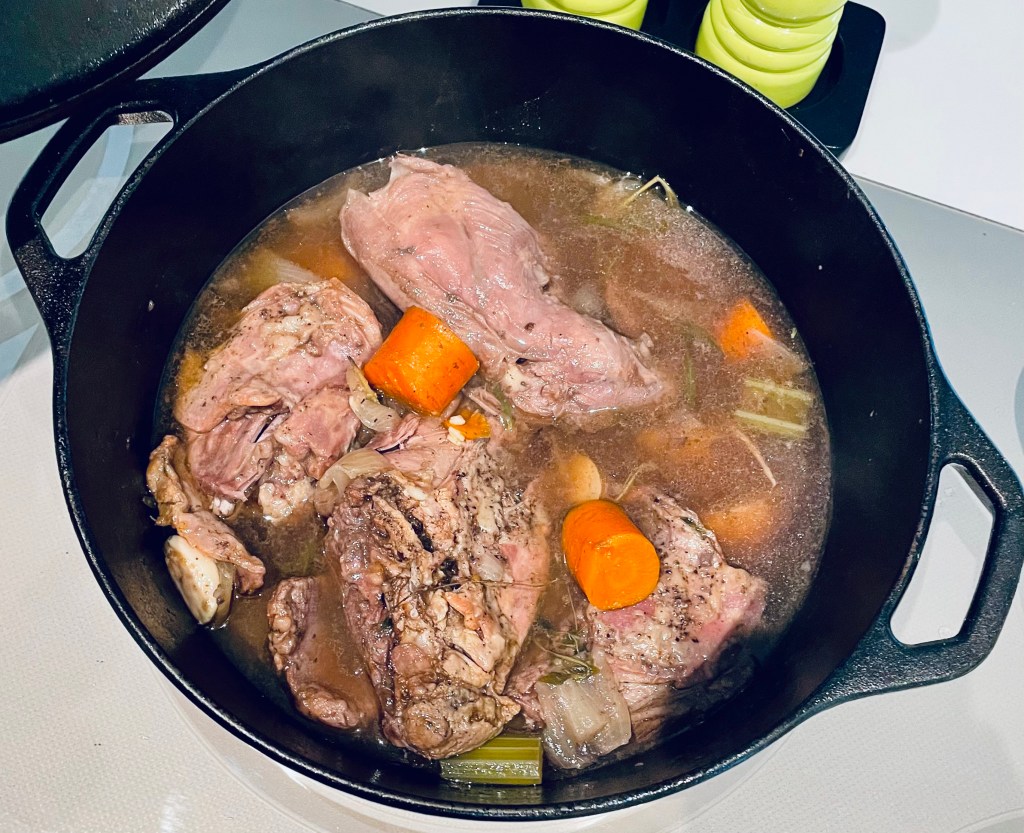
    So, I finally cooked the jackrabbit. I went with a braise on the pellet smoker. Verdict…fantastic! It was fantastic. Honestly, the prep was much easier than I expected. The flavor was outstanding. The cook management—easy. Here are a couple of pics of what it looked like.

    I’ll be honest. It was so, so good. The texture was like a very tender chicken or turkey. The flavor was more like a silky roast. The recipe was simple and didn’t include anything extravagant.

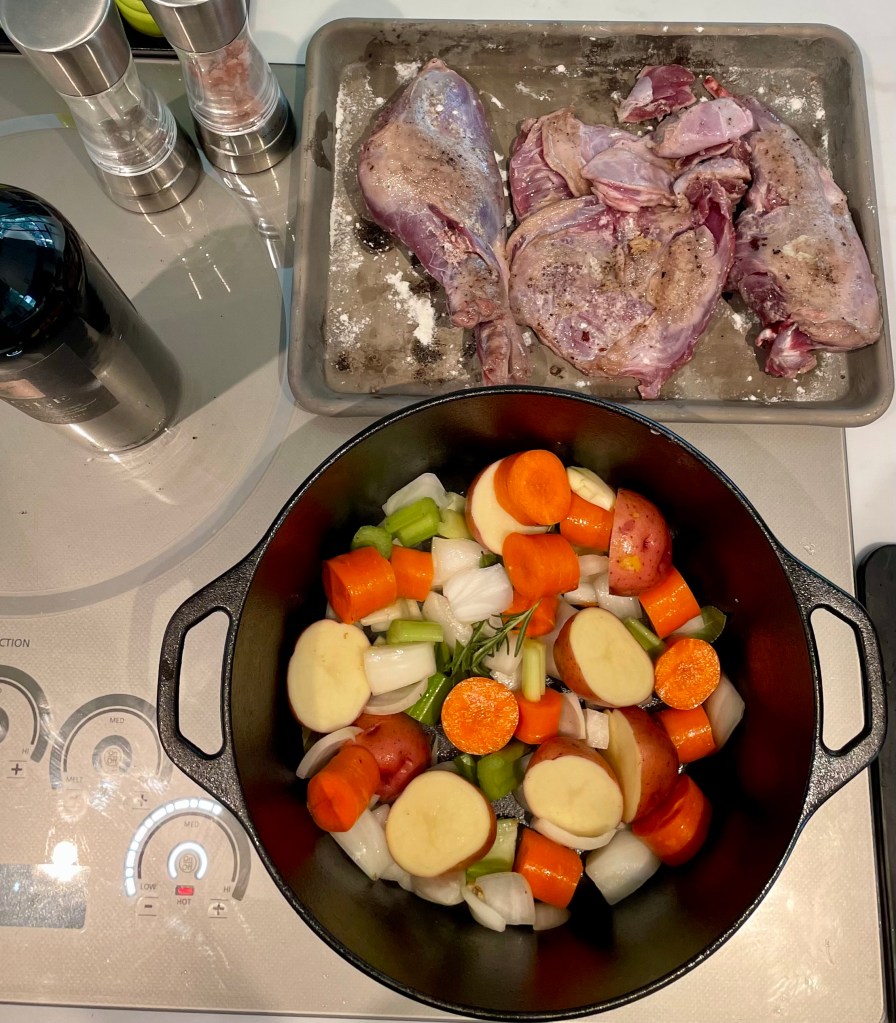
    Browned the rabbit just a little bit. Briefly sauteed veggies including onions, garlic, celery, carrots, potatoes, along with thyme, rosemary, and bay leaves. Included some red wine and venison stock. Then put it on the pellet smoker for about 5 hours.

    Like I said, it was fantastic.

  • Hogs and Jackrabbits

    I made a quick trip to the ranch for an overnight. I needed to refill some feeders, fix one, adjust a couple. I also checked the cameras. Then, I pulled up an old well pump. You know…ranch stuff.

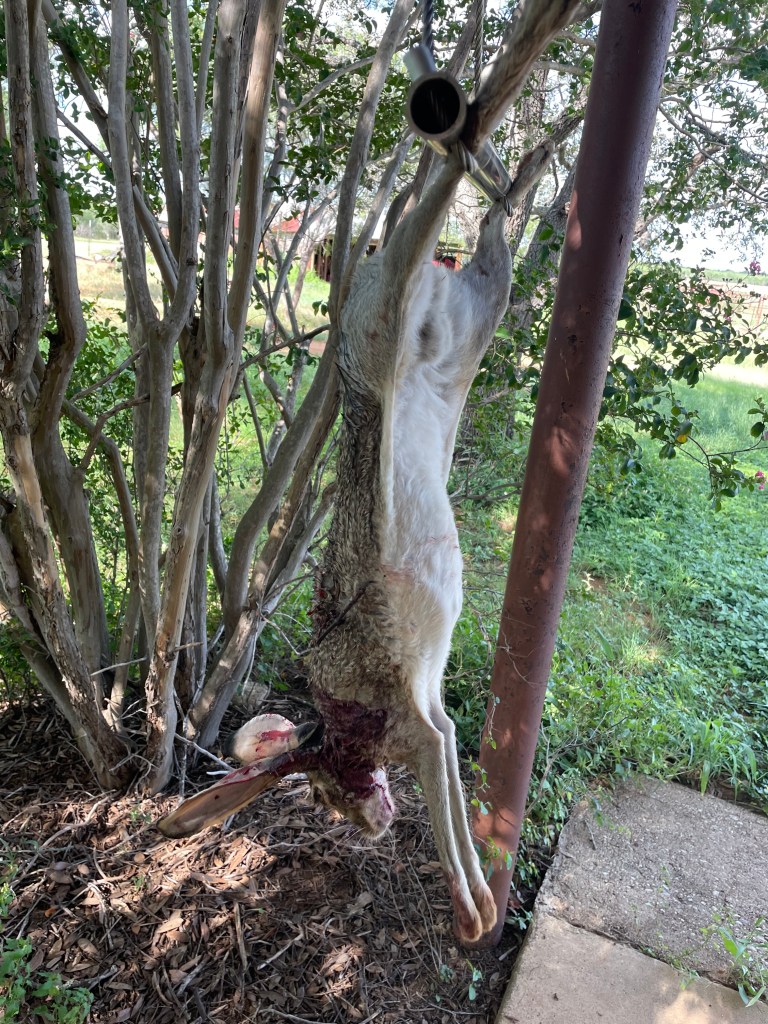
    I planned to hunt for hogs a little while I was there. Well, the first night was a big nothing burger, except for a jackrabbit. Can you eat jackrabbit? From what I see online, the jury is out on that one. I’m going to lean yes, based on what our European friends have been doing with “hare” for a long time.

    Just when I was about to give up on the hog hunting Saturday morning, I decided to go for a stroll. I had been sitting in my tree stand, which has usually been a great view for animals. But I grew tired, and impatient. And I needed to pack up and get going. So, I decided to check on one corner of the property. It was somewhat on a whim. We have received so much rain in the past month, which seems like a non sequitur but it matters.

    I hadn’t take more than 15 steps when I heard the first squeal and then a grunt and then another squeal and more grunting. I knew it was close. I could almost smell it. I definitely heard it breathing. Because there has been so much rain in the past month, all the grass was overgrown, a lot. It felt a little like Children of the Corn. Anyone remember that?

    Snort. Snort. Grunt. Grunt. Splash splash, snort, grunt. I heard him clearly, but I couldn’t see him. I tried crouching low in the grass. I looked toward my left because that is where I heard the snorting. I also heard the grunting, breathing, and splashing there.

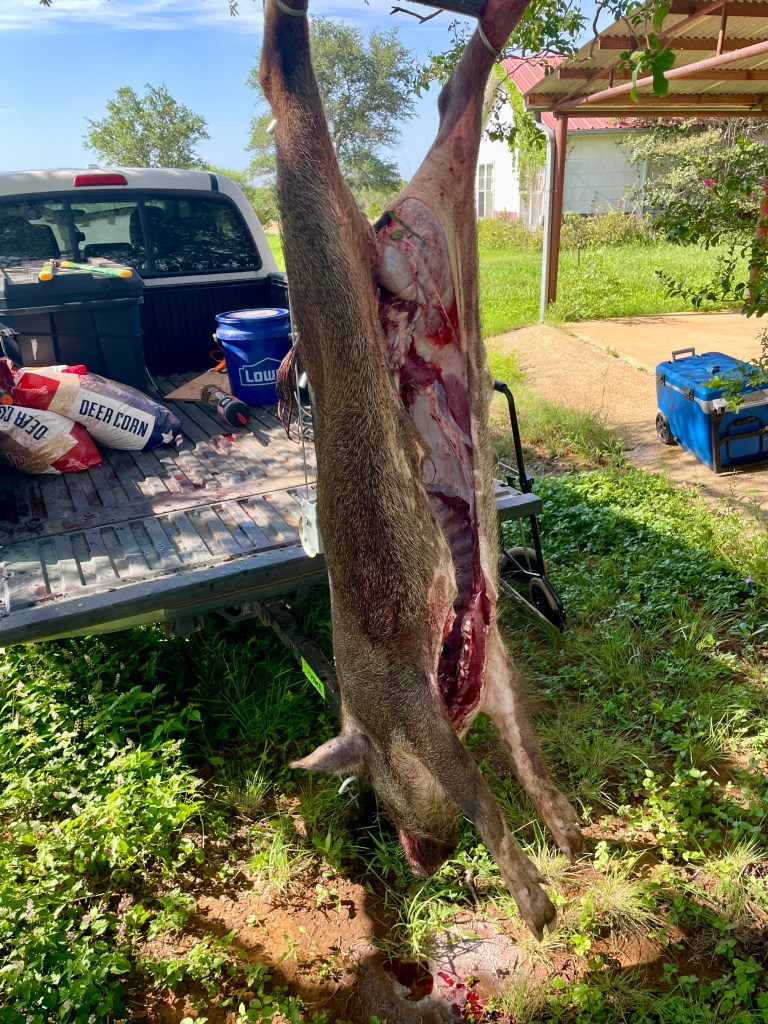
    Then I turned every so slightly to my right, and there he was. A big boar. He sounded big. He looked at me, kind of confused. Although, I don’t know if he actually saw me. But he looked in my direction. I took aim quickly at less than 20 feet…that’s right…feet. And took a shot. Clean shot through the vitals, and he dropped almost instantly.

    However, since I was on foot chasing this guy, I wasn’t near my truck. Random detail—I recently bought a hand cart from Harbor Freight thinking it might work for this kind of situation. The hand cart is great, just not for this situation, where a piece of dead weight pushing 120, 130, 140 pounds is making the drag experience in thick grass a bit challenging for someone in the second season of life.

    All that to say, I did field dress him. The weight was more than I could handle at 9:45 am. I was supposed to be heading home. So I used my seemingly good idea—Harbor Freight foldable hand cart. No knock on Harbor Freight—but it’s probably better suited for something that is not quite literally…dead weight.

    Anyway, I got it back and skinned and partially processed pretty quickly.

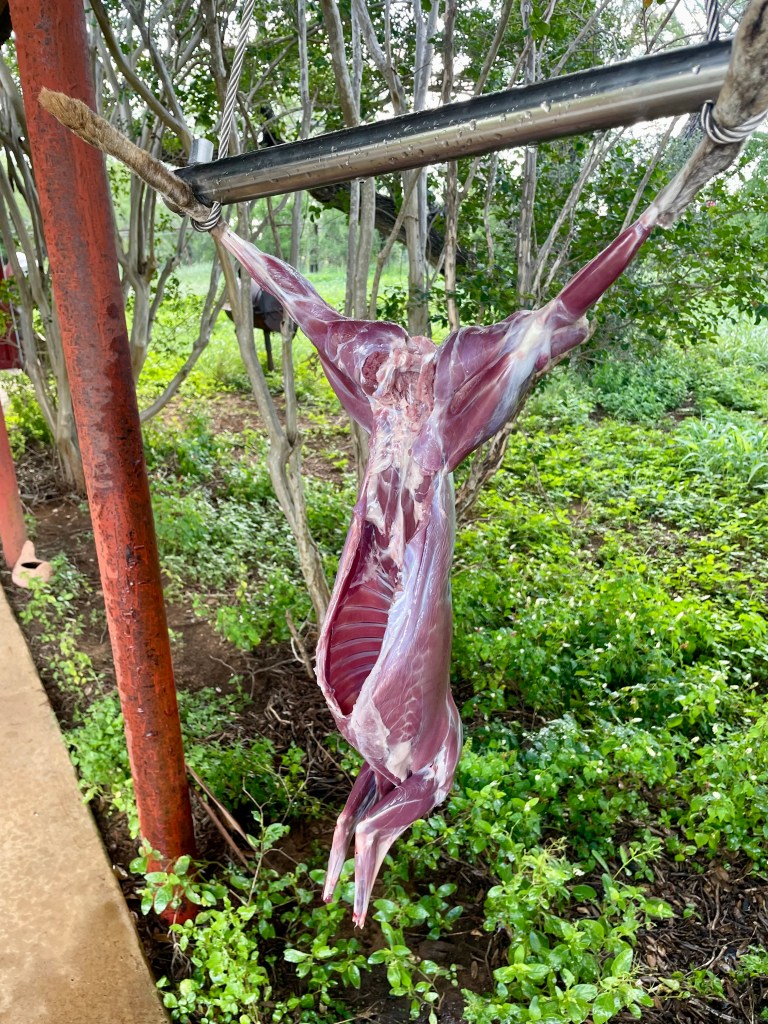
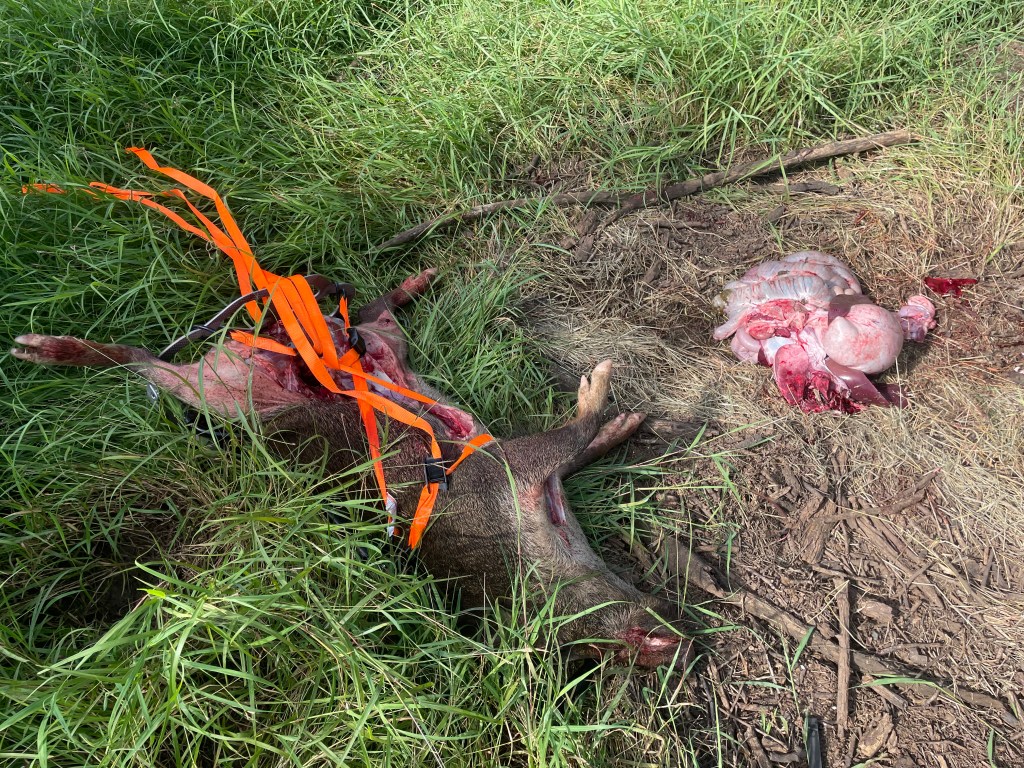
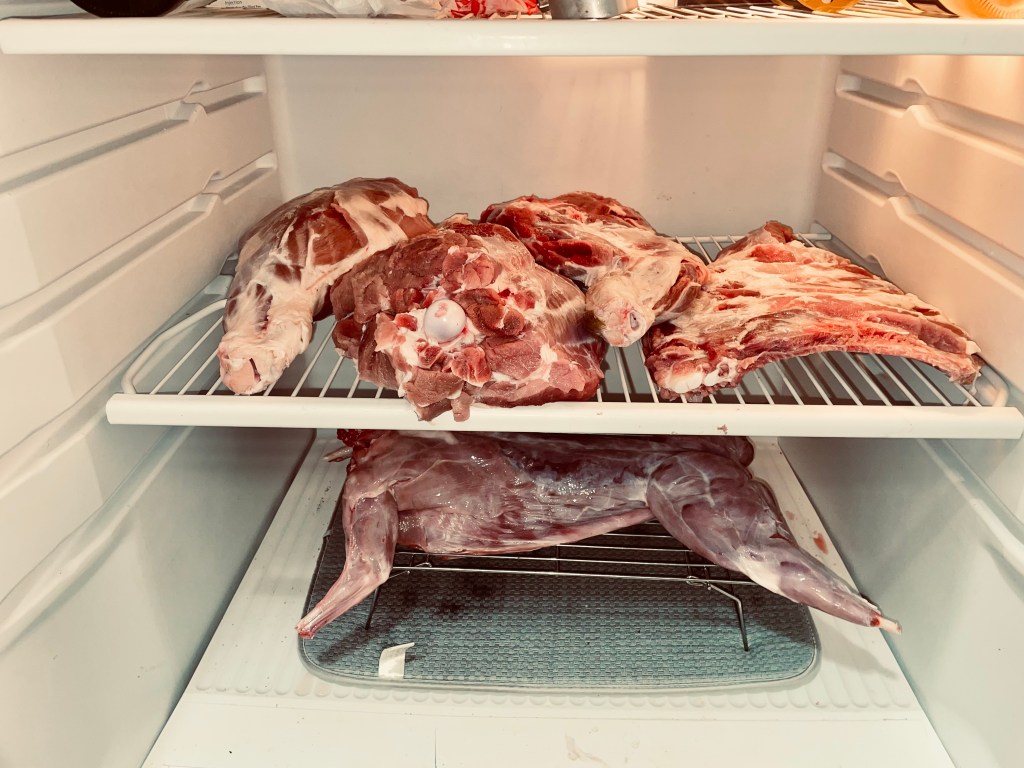
    Here is what part of the weekend looked like, and here are some shots of the results.

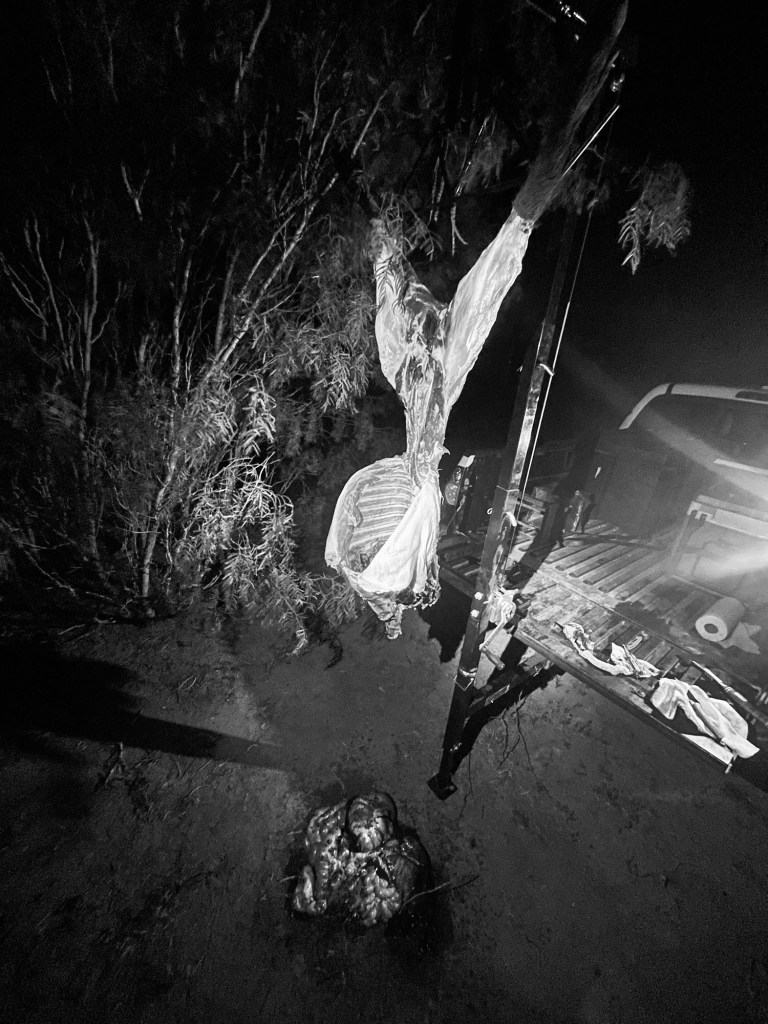
    I found that cleaning the jackrabbit from a gambrel was much easier than other rabbits I have cleaned.

    It was a heavy boar. Not huge, but heavy. I had to field dress it. I often take care of the guts when I get it back to base. But because of where I got this one, and how I planned to haul it out—with a foldable hand cart—I needed to drop some weight.

    Don’t judge me. I’m still perfecting my field dressing and skinning. Yes, that is what you think it is in the pelvical region. Like I said…still working on it.

    I already gave some of the hog away, but some of it I’m aging. I aged the jackrabbit for 24 hours in my aging fridge. There will be more about that later.

  • Ham. Hog Ham. Let’s Give It A Try

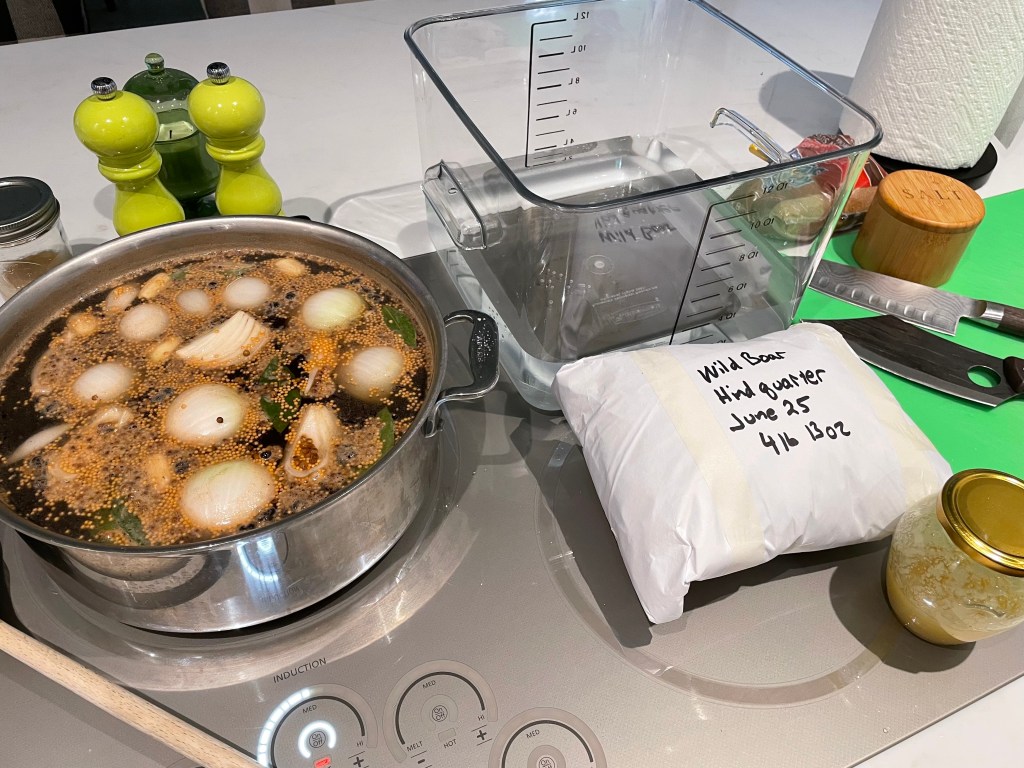
    I got a hog a few weeks ago, and one thing I haven’t tried yet, is to make a ham out of the hind quarters. Well, I’m giving it a try now. We will see how this turns out because I relied on a little AI to develop the recipe.

    Am I nervous? Not really. Am I concerned? A little.

    Here is what Perplexity suggested after several iterations back and forth with what I thought made sense and what it was suggesting.

    For 8 Quarts (2 Gallons), Combine:
    • 2 cups kosher salt
    • 1 cup brown sugar
    • 1/2 cup honey
    • 1 tablespoon pink curing salt (#1)
    • 16 juniper berries, lightly crushed
    • 8 teaspoons mustard seeds
    • 8 teaspoons coriander seeds
    • 8 bay leaves
    • 1–2 onions, quartered
    • 8–12 garlic cloves, smashed
    • 8–12 whole cloves (optional)

    Brine Preparation Steps
    1. Dissolve and Infuse: Heat 2–3 quarts of water with all salt, sugar, honey, and spices until dissolved and aromatic.
    2. Cool: Add the remaining cold water and ice to bring the brine to refrigerator temperature before adding the meat.
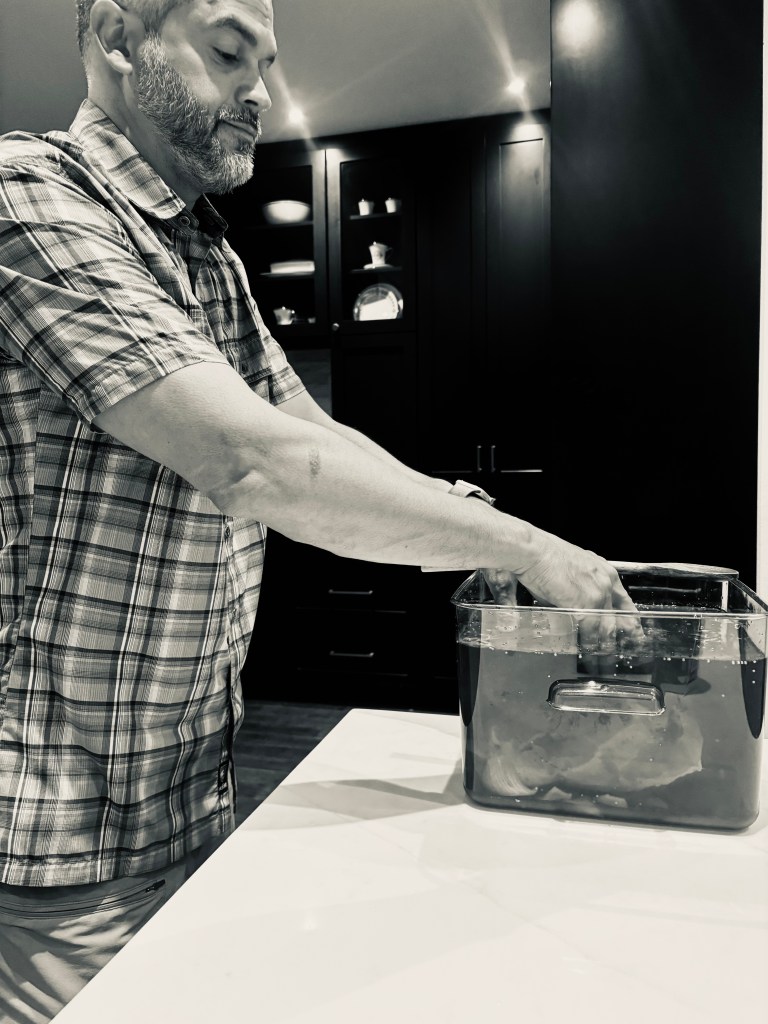
    3. Submerge: Place the ham in the container and pour the cooled brine over until fully submerged. Add a plate or weight if needed to keep it under.
    4. Brine Time: For a bone-in ham of your size, brine for 6–8 days, turning the ham every couple of days for even curing

    Now, I thought the mustard and coriander amount seemed a bit much, so I scaled it down, Also, for what it’s worth, I used some honey a gathered in Moldova. Will it make a difference? Maybe. It’s an interesting tasting honey—certainly different than the honey we find here in Texas.

    Feel free to comment if this looks feasible or totally unfeasible.

    Just whatever you do…don’t drop the brine as you take it to the fridge…

  • Home Processing Wild Game: If I Can Do It, You Can Too

    I took my very first deer to a processor years ago. I have nothing against processors. They are amazing, and they can deliver some awesome product for you if you field dress and prepare your catch properly.

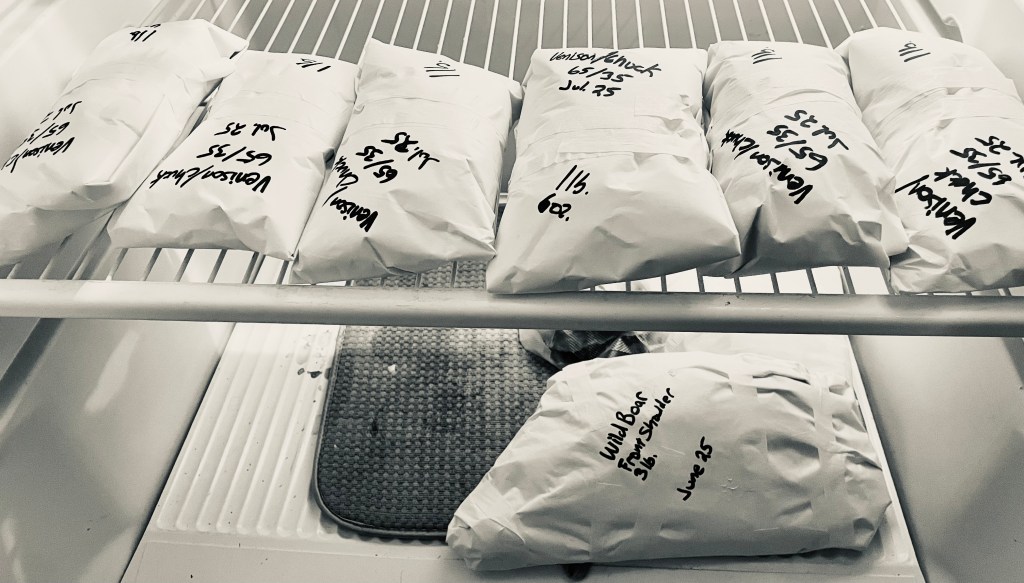
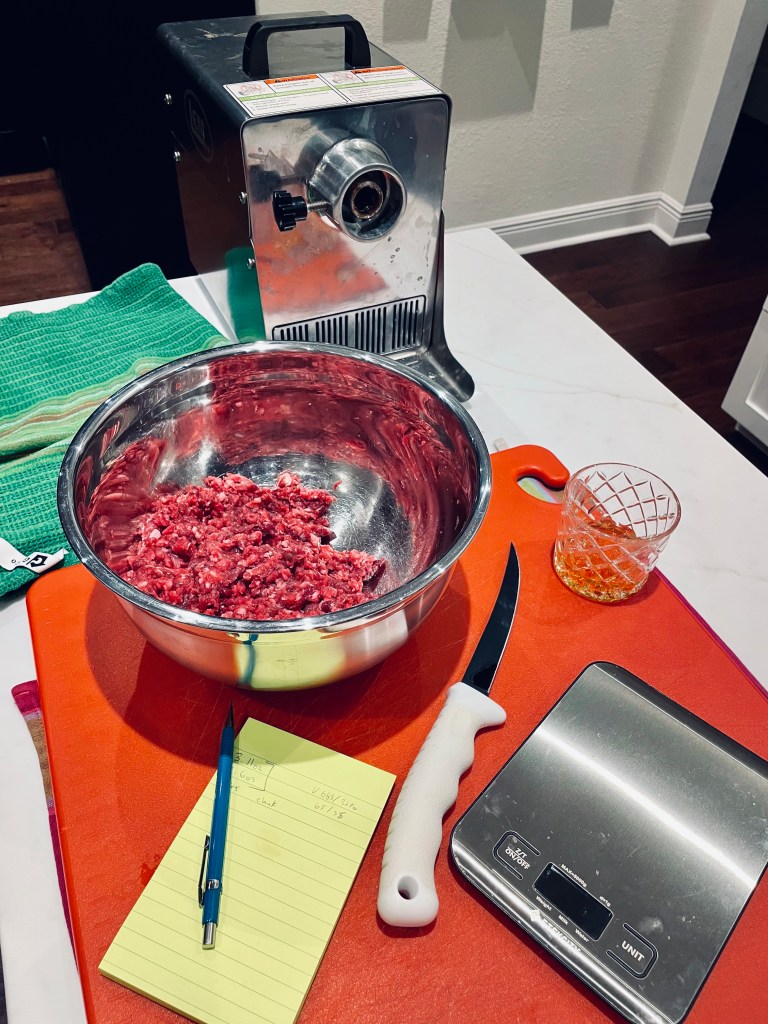
    But after that one experience, I decided to invest in just a little equipment, a little know how, and a lot of time. You know what I discovered? Home processing is more than doable. It’s quite enjoyable!

    I have discovered that it is not really that hard, but it does take time. My wife closed the bedroom door a few minutes ago, for instance, as I finished packaging some venison/chuck ground I was working on. It probably doesn’t help that I decide to do my processing at the most inopportune time. But is there really a most opportune time? Maybe.

    Nevertheless, what I will say is that it is entirely doable for amateurs like me. If you want some tips or some lessons or some thoughts, just message me—once I figure out how to get my contact section functioning. Please bear with me. Much like my wild game processing, figuring out this website has been a trial of trials.

    But here is what I will ultimately say. You can do it. If I can do it, you can do it. It’s not that hard. It does take time. Good equipment helps. Space in the kitchen helps. A glass of whiskey definitely helps. And a family willing to let you play is a bonus.

  • Trials and Trials

    After the shot is really what it’s all about. There is so much gear and technique and anticipation and excitement and lore about what leads up to the shot. But honestly, it’s what happens after the shot that comprises so much of a hunt.

    I’ve been hunting hogs in South Texas for a few years now, and each time is a new experience. Sure, I’ve gathered some tricks along the way, but the one trick I carry with me from hog to hog is that the process will not be perfect and that is ok. If you watch a lot of YouTube videos, you’ll end up thinking that something is wrong with you because you can’t carve an animal in minutes with precision. Trust me. Nothing is wrong with you. Every animal is different, and the trial of figuring out how to handle each one is all part of the experience.

    So appreciate the trial that animal gives you before, and after the shot.

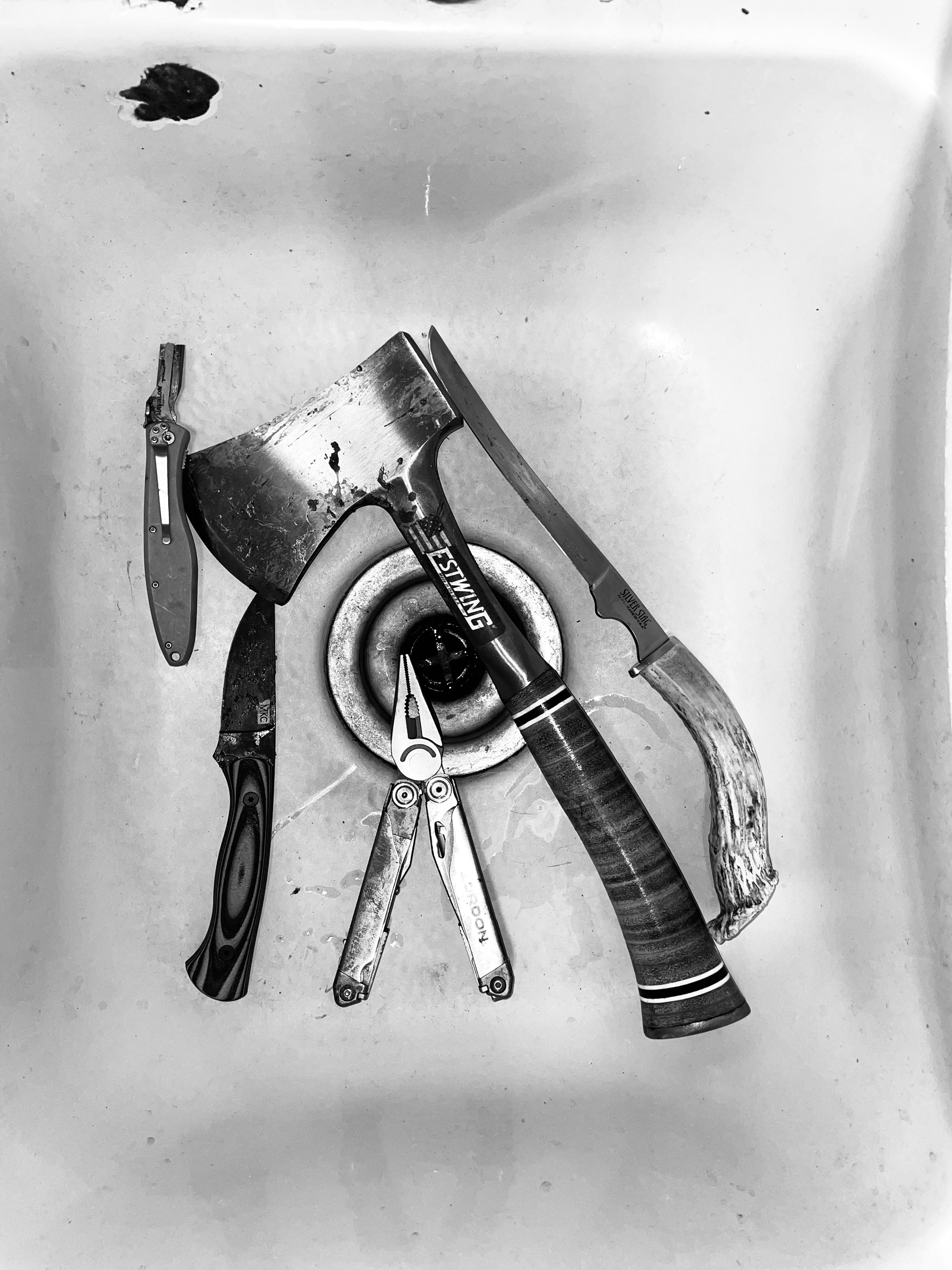
  • Tools of the Trade

    I’m new to this websiting thing, so forgive me if the picture renders as some giant mural. The point of this is to show that there are tools, and there are more tools. The process of processing for me takes more than I plan for.

    And you know what? That’s ok. Take your time. Use what you have. Use more than you have. And if you end up with a sink full of tools, hopefully you at least have a chest full of wild game meat.

  • Look Around

    The world is much bigger than we can appreciate, and it is much smaller than we realize.

    There is more to this thought coming…

    Like I said, there is more to this though. I can’t remember if I was just drunk, or if there was something deep in though stirring in my mind. Let’s go with the latter. Why do people say that: the former and the latter? Who talks like that. Nevertheless, there was mostly likely something stirring in my mind.

    In fact, I remember are very good friend prompted me on this thought. I’ll let him comment on it if he wants to.

    I travel a lot for work. I travel a lot around the world, which is something I do not take for granted. But, in my travels around the world I am noticing that so many other people are so much like I am, and yet they are also so different from me. Or maybe I should say, I appear so different from them. In that way we all share something quite familiar—a human experience. And we all share something very different—unique human experiences.

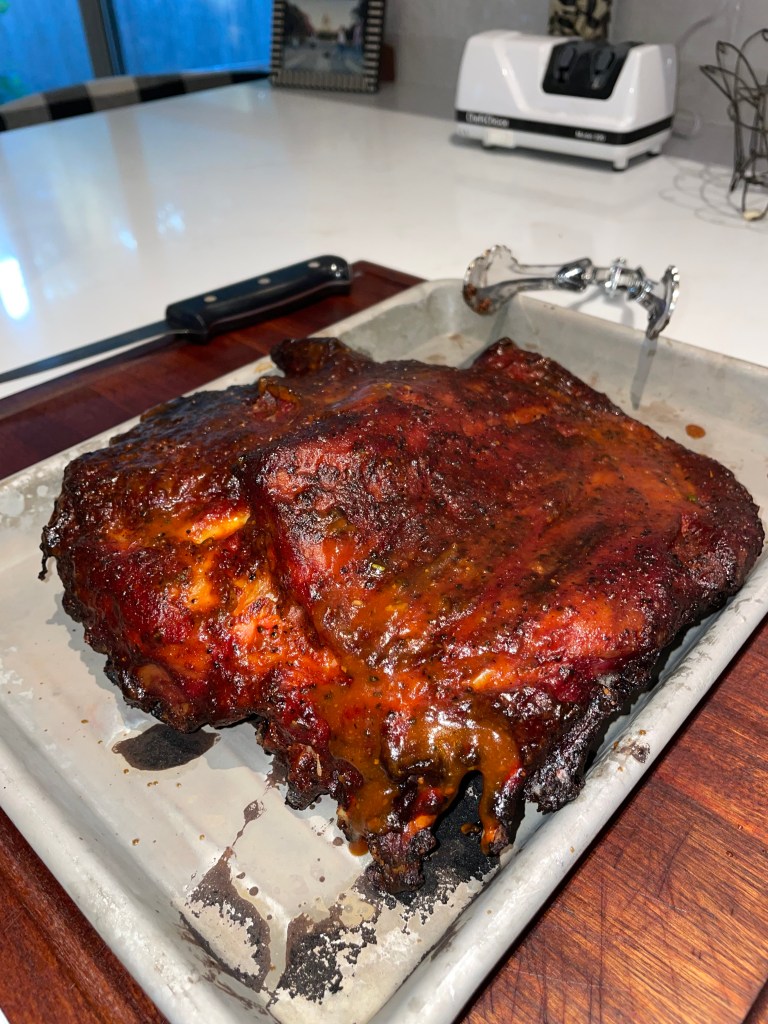
    How cool is that if we really think about it? Something unique I get to experience in South Texas…wild boar ribs. I can’t get that in Mongolia.

  • Getting Started Takes Getting Started

    I am not a taxidermist. I can barely say I’m a hunter, or a true outdoorsman for that matter. But a word has been lingering in my ear for the past little while, and figuring out when, where, and how to act on that has me wondering about getting started.

    Explore. That’s the word. It’s coming to define me, I think. As I lean into this second season of life, something is tugging at my senses to explore. What exactly? I don’t know. The outdoors and this set of small mounts I’m working are a part of it. They are not all of it, but they are an important part.

    It’s a small start, but it’s a start nonetheless.